lady with iPad

NEVER Say This Word to Users (Avoid Bias and Improve Your Research Data)

Picture this: you’re invited to a research study. The researcher greets you with a smile and says, “This is an interactive activity that will take about 20 minutes.” Sounds intriguing, right? Now, imagine instead they say, “You’re about to take a test.” Suddenly, your mind races. “What if I fail? What are they looking for? Am I about to be judged? Will I look stupid?” That tiny word—”test“—can flip a switch in your brain, and not in a good way. If your role involves gathering data from customers, this is crucial to think about.

How people wrongly use the word ‘test’

I see people using the word ‘test’ all the time, even those working as professional researchers. 

Pre-research: 

  • Recruitment: Customer emails to ‘Take part in our user test’. Be careful of your participant recruitment company too because those are often just admin staff who then promote your research to their database as ‘user testing’. 
  • Calendar invites sent to participants with the title ‘User test’ (note: this reads as though the user is being tested. If you really must use the word ‘test’, please please for the love of God at least refer to it as a website test, not a user test!)
  • Initial welcome: ’Are you here for the user test?’ (said by the receptionist or researcher).

During the research

  • Confidentiality form / NDA will often let slip a mention of user test. Sometimes these are written by legal so you’ll need to tell them to change the wording.
  • Introduction section of the research: The facilitator will say ‘thanks for agreeing to take part in our user testing’ or similar. 
  • Aiming to reassure: ‘This is not a test’ (just saying the word will prompt people to think of it as a test).
Image: This is not a test

Why Labels Matter (Hint: They Totally Do)

To find out why labels matter and how they affect us, lets quickly head back to 2004, when Ross and colleagues ran a fascinating study. They asked people to play a game that involved cooperation (or not). Half the participants were told it was called the “Wall Street Game,” and the rest were told it was the “Community Game.” The rules were exactly the same, but guess what? The “Wall Street” group acted way more competitively, while the “Community” group leaned into collaboration. Just changing the name to ‘Community’ made them behave in a more collaborative way.

Labels act like cues—subtle signals that shape how people think they’re supposed to behave. If you call something a “test,” you’re setting a tone of evaluation. And when people think they’re being judged, it’s game over for authentic responses. 

What Happens When You Say “Test”

You might think “test” is an innocent word. It’s not. Here’s what it does to your participants:

  1. Cranks Up Anxiety: “Test” screams, “You’re being judged!” and that makes people worry. Anxiety takes over, and instead of focusing on the task, they’re focused on not messing up.
  2. Triggers People-Pleasing Mode: Participants may try to give you the “right” answers instead of their honest thoughts. Spoiler: this isn’t great for your data.
  3. Activates a Fixed Mindset: Carol Dweck’s research shows that when people feel evaluated, they can get stuck in a “fixed mindset,” where they play it safe instead of trying something new.
  4. Sets Up Defensive Behaviours: A test feels like a challenge, and people might approach it like they’re protecting themselves rather than exploring freely.

Ditch “Test” for Friendlier Options

If you want participants to relax and engage, ditch the T-word. Here’s what you can say instead:

  • Swap out “test” for words like “research,” ”activity,” “feedback,” “game,” or “exercise.” Doesn’t that sound more fun already?
  • Frame it as exploratory: “We’re curious to see how people solve situations like this.”
  • Keep it collaborative: “We’re exploring this together. There are no wrong answers.”

These tiny tweaks can work wonders. They tell participants: “You’re here to help us learn, not to be judged.”

How to Set the Right Tone in Your Study

Here are some tips to make sure you’re creating a participant-friendly experience:

  1. Test Your Labels (Pun Intended): Try out different phrases during your prep phase. Which one makes people feel most at ease? 
  2. Train Your Team: Make sure everyone on your research crew knows the drill—use non-judgemental, inviting language.
  3. Start Off Right: From your first email to the consent form, use words that spark interest and collaboration, not fear of failure.
  4. Avoid Fancy Jargon: Even “assessment” or “evaluation” can sound intimidating. Keep it simple and warm.

Why It’s Worth the Effort

Here’s the deal: your goal as a researcher is to understand how people think and behave in the real world. But if your participants feel like they’re under a microscope, their behaviour changes. By being mindful of the language you use, you can create an environment where people feel comfortable being themselves. And that means better, richer data for you.

So, the next time you’re setting up a study, think twice before using the word “test.” A little tweak in your phrasing can make a big difference to how your participants feel and the data you collect.

References

  • Ross, L., Greene, D., & House, P. (2004). The “Wall Street Game” versus “Community Game”: Situational labels shape decision-making in social dilemmas. Journal of Personality and Social Psychology, 87(1), 1–13.
  • Dweck, C. S. (2006). Mindset: The New Psychology of Success. Random House.
  • Kahneman, D. (2011). Thinking, Fast and Slow. Farrar, Straus and Giroux.
  • Schwarz, N. (1999). Self-reports: How the questions shape the answers. American Psychologist, 54(2), 93–105.

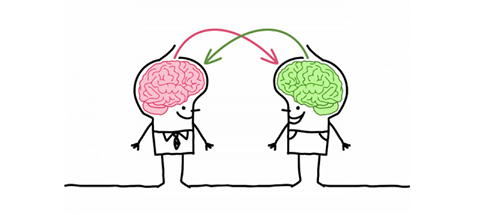
Day 1 UXmas Psychology: Mental Loads

Imagine you’re using the Government website for the first time to file your tax return. You have to remember important information, take care to not make any errors, make sure you pay the correct amount and submit everything correctly. As you do this, there are things you’re thinking about (cognitive), things you’re looking at on the website (visual) and things you’re physically doing like typing on the keyboard and using the mouse (motor). 

These are what we call loads.

Loads

There are three loads in total (cognitive, visual and motor) and you might assume they’re equally weighted, but they’re not. Each one uses a different amount of mental resources, in this order:

1 Cognitive

People use the most mental resources if they’re asked to remember something or perform a mental calculation.

2 Visual

Looking at something on a screen uses more mental resources than motor but isn’t as demanding as needing to think about the task.

3 Motor

Motor is the least demanding load as most movements are performed instinctively, without us needing to think about what we’re doing.

Do everything in 3 clicks?

If you work in UX or as a designer, someone at some stage has no doubt advised you that everything should be possible to do in 3 clicks. I’ve no idea which genius came up with this theory but I do know that it’s a load of rubbish. When designing a digital user experience, there are always trade-offs. If you have to add extra clicks but the trade-off is that the user doesn’t have to think as much and the user journey feels more logical, then those extra clicks are worth it. Adding clicks is less of a load than thinking. I’ve personally seen this time and time again in the UX research and user testing that i’ve conducted over the years. As long as the experience is well thought out, logical and the pages are well structured, the number of clicks doesn’t matter. 

When motor loads are too much

Despite motor loads being the least effortful of loads, there are things that designers do that increase their effort. Many years ago I worked for one of the leading mobile brands and there were many times when I had to go back to the designers after user testing to tell them their hit areas and visual buttons were too small for people to press easily. The UI buttons would require multiple presses or a very accurate tip of the finger press to work, and people with long finger nails had absolutely no chance. What looks good on a large monitor often didn’t work well when it was shrunk down onto a small screen.

Sometimes you want to increase loads

Most of the time you’ll be looking to decrease loads to make your product easier to use, but there are times you may want to increase the load. For example you might add a video to a web page to deliberately draw the user’s attention to the product (visual load increased). The best example of purposefully increasing loads is in the gaming sector. In a game, there are quests that the user should find challenging to accomplish. Some games have high cognitive loads as the user has to work out what they need to do to make it to the next level. Some games have high visual loads, where users need to find things on the screen. Some have high motor loads, where users have to use a physical device to move around the game and interact with the characters onscreen. 

Key takeaways

  • Evaluate your existing website/app/product. Can you identify any opportunities to reduce any of the loads to make the experience easier?
  • Don’t make people think too much. When designing your product, try to reduce the cognitive load as much as you can. Don’t make people remember information that’s going to be too difficult for them to recall. Think how you can get around this, such as leaving the field optional or allowing them to complete this information later.
  • Where you can, look to reduce cognitive loads by increasing visual and motor loads. For example, rather than the user needing to read a full web page of information, a large clearly written call to action that draws them to the right place would be more effective.
  • Make sure that physical targets are large enough to be easily reached and easily pressed.

Interested in UX Psychology? Sign up to 24 FREE lessons in UX Psychology in my countdown to Christmas!

Lisa Duddington MSc, UX Consultant

Need UX research? PrestigeUX.com

Need users? INeedUsers.com

Can reciprocation be influenced?

Much research has evidenced the law of reciprocation (if I do something for you, you’re more likely to do something for me in return) but how much can reciprocation be influenced? And does the amount of effort that is put into the initial activity have a subsequent effect on the likelihood and the amount of reciprocity that is given in return?

Experiment setup

An experimenter held a door open for a participant in either a low-effort or high-effort condition. Total participants 194.

  • Low effort condition: The experimenter walked in front of the participant and propped the door open with his shoulder, while looking down at his mobile phone.
  • High-effort condition: The experimenter held the door open with his free hand while the participant exited the building before them. They also looked and smiled at the participant whilst doing so.

The results

  • People were more likely to thank the experimenter in the high-effort condition. In the low-effort condition, 50% of participants thanked the experimenter versus 84.9% in the high-effort condition. 
  • Verbal thanks was not a predictor of subsequent helping behaviour.
  • The experimenter dropped pens onto the floor after holding open the door for the person. In total, 27% of participants helped the experimenter to pick up the pens. Of these, most (64%) had took part in the high-effort condition, with 19% being in the low-effort condition.
  • The likelihood of participants’ helping to pick up the pens varied with physical distance. The experimenter waited for the participant to walk a specific number of steps out of the building before dropping the pens. Participants were more likely to help, the less steps they had taken. Participants in the high-effort condition helped in greater proportion at all distances when compared to the low-effort condition.

In Summary

Participants verbally thanked and reciprocated more frequently in the high-effort condition.

How to use this

Rather than simply offering your customers a discount or freebie, think of what you could offer that would be perceived by them as having taken greater effort. 

Read more

Fox GR, Araujo HF, Metke MJ, Shafer C and Damasio A (2015) How Does the Effort Spent to Hold a Door Affect Verbal Thanks and Reciprocal Help?

Psychology of panic buying loo roll

Panic buying is what people naturally do when faced with an imminent disaster, like the spread of the coronavirus. Whilst it may seem irrational, it actually has a psychologically rational basis. 

Panic buying toilet paper has become a major focus in the media and supermarket shelves have been stripped bare. There have been fights in stores over toilet roll and I saw one guy running down the aisle to grab a packet. It’s pretty crazy! Why is everyone so panicked about loo roll? Let’s have a look at the psychology to find out.

The role of the media

The media have played a major role in creating anxiety in people with regards to running out of essential items and food. All we see in the news every day, is coverage of shops running out of items and reports of panic buying. There were even some reports of people fighting over toilet roll.

They had experts debating whether shops would be able to keep up with demand and would we run out of food? These reports went on not just for days, but weeks, and if they didn’t have an effect on you at first, the cumulative daily reporting becomes an internal ear worm. And, if you weren’t worried about how many toilet rolls were in your home, you soon had that nagging voice in your head about whether you should be going out and buying more, you know just in case… 

It’s become a self fulfilling prophecy

When the media continuously show us images of empty toilet roll shelves, it enhances our belief that this problem might exist in our own local supermarkets. We begin to worry that when we next go shopping we might see empty shelves too. The more people who see these images and news reports, the more likely they’ll be to pick up extra toilet roll on their next shop and soon enough it becomes a real problem and there are empty shelves in your local supermarket. Your belief of what would happen, became your behaviour – you made it a reality.

Toilet paper is a cleanliness product

The main messages we’re being given about Covid19 are all about hygiene and cleanliness. We’re being told to wash our hands, not touch our face, not to get too close to other people… Toilet paper is a cleanliness product and therefore, buying it adds to that sense of feeling more clean and this makes us feel more secure, as we feel like we’re following the advice. 

Social proof 

We’re a social species that imitates what others are doing. So when we see that a large amount of people are acting in a certain way, we have a very natural instinct to copy this behaviour. When you see images of empty shelves and hear that your friends are all stockpiling toilet rolls, you think to yourself, “Well, maybe I should be doing this too.”

When other people hoard and they share images of empty shelves all over social media, it sets an example for others to imitate.

If everyone else on the Titanic is running for the lifeboats, you’re going to run too, regardless if the ship’s sinking or not – Steven Taylor

Scarcity

Seeing reports of empty shelves on the news and then, seeing them for yourself in real life  validates any concerns you may have had and can trigger that urge to grab whatever is left. You may feel a sense of panic triggered by seeing it for yourself. When things are scarce they also hold more value to us. So when it’s difficult to find toilet roll, suddenly your perceived value of toilet roll increases, making the urge to buy it more intense. Hoarding is a natural human response to perceived scarcity. But this irrational panic buying can also lead to price gouging, and we’ve already seen this with prices on eBay for things like toilet roll and hand sanitiser going through the roof! These price increases add to it being seen as a scarce product. What started as perceived scarcity becomes actual scarcity.

Fear of loss and loss aversion

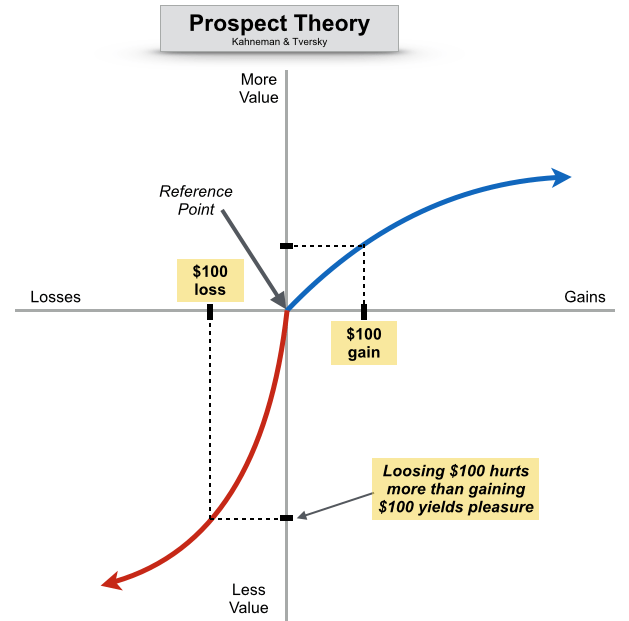
If we later realise that we need toilet paper and we didn’t buy it when we had the chance, we will feel bad. A study by Kahneman and Tversky showed that losing $100 feels twice as strong as winning $100. This is why we have such an aversion to loss – it physically hurts us more.

Can you see how the red loss line is steeper than the blue gain line in the below diagram? This means that $100 loss is 2x more painful than a $100 gain. 

Hoarding is a natural response to stress

Now is a time of uncertainty and social isolation. These factors can psychologically motivate people to buy things they don’t need, especially people who struggle to tolerate uncertainty. One of the strongest predictors of hoarding behaviour is a person’s perceived inability to tolerate distress. If it’s in a person’s general nature to avoid distress, they are more likely to buy more products than they need. This type of person will find it more difficult to believe the government when they announce supermarkets will not close or that the supply chain is strong. Or, if they do believe them, they may decide it’s best to be prepared, just in case things change. In the post-brexit era, trust in the government for many people is low, and when public trust in the government to handle a crisis is low, panic buying is more likely to occur.

People want to feel more in control and less anxious

This whole situation is changing rapidly. Every day there is a new announcement from the government and the speed at which our lives are changing is a shock to the system. People are feeling out of control. Panic buying is fuelled by anxiety, and a willingness to go to lengths to alleviate those fears: like queueing for hours or and buying way more toilet rolls than you need!

People react to extreme situations with extreme behaviour

Compared to past pandemics, the global response to the coronavirus has been one of widespread panic. Steven Taylor is a clinical psychologist and author of The Psychology of Pandemics, he says “On the one hand, [the response is] understandable, but on the other hand it’s excessive. The coronavirus scares people because it’s new, and there’s a lot about it that’s still unknown. When people hear conflicting messages about the risk it poses and how seriously they should prepare for it, they tend to resort to the extreme. When people are told something dangerous is coming, but all you need to do is wash your hands, the action doesn’t seem proportionate to the threat. Special danger needs special precautions.”

Zero risk bias

Research on decision-making has documented a zero risk bias. People like the idea of eliminating one category of risk entirely, even if it is something as seemingly silly as running out of toilet paper. People can get complete control over that one little thing in their lives and feel like they are doing something. 

People are motivated largely by self-interest and to avoid suffering (whether physical or emotional, real or perceived). We spend time evaluating possible risks and reducing them, because it means we get to live a longer life. And while it may not make much rational sense to hoard packs of loo roll, it makes us feel like we’re taking some precautions to minimise risk. And remember, different people have different risk tolerances. So whilst you might feel perfectly fine about not overbuying loo roll, another person may need to.

Understanding the psychology behind our shopping behaviour can help us to make more rational purchases during this time. If you’re feeling compelled to panic buy, it might be worth asking what it is you’re really afraid of.

Introducing MediaCityUX.com

Hi everyone! How are you doing?

This is just a quick post to tell you about the launch of our new site MediaCityUX.com

As I’m sure you already know, I run three UX businesses:

Keep It Usable: Human-driven research and design. Award-winning user experiences, service design and innovation based on Psychology, Science and Behavioural insights. You’ll often see us speaking at events and educating about how Psychology can be used to change behaviour in digital experiences and persuade people to buy online!

Our work has been showcased at 10 Downing Street, won awards and featured on BBC’s Horizon. We’ve also appeared on BBC Breakfast, radio and at events, sharing our expertise.

Home UX Lab: Pioneering homely style research lab, combining the benefits (validity) of ethnographic research with the rigour of a lab. Home lab has been the inspiration for multiple home style labs since we invented it.

I Need Users: The only participant recruitment agency run by UX experts. Shorter lead times, last minute recruitment options, extra screening processes, better quality users and less dropouts. Worldwide user recruitment.

They’re all based at Media City here in the UK, although we work worldwide for global clients. So, we created MediaCityUX.com for you to easily find UX services when you need them. Whether that’s a full design project or research piece by Keep It Usable, needing to rent a lab in the UK (Manchester) or needing participants for your own research.

Bookmark it.

Screen Shot 2018-04-26 at 09.22.44.png


Addicted to user research

I was recently invited to a business meal and as I found my place and settled down, I waited with happy anticipation for the others to arrive on my table. A quick look at the name cards told me that my direct table mates to my right and left were both males and judging from a quick look round the room they were going to be middle aged or older.

The gentleman to my right was the first to arrive, let’s imagine he was called John. John funnily enough did turn out to be middle aged but he was very clued up on technology, having run a social media agency in his past. He was a very interesting character, having previously worked in PR for celebrities and lived a rather extravagant life.

David

To my left was an older gentleman, let’s call him David. The curious researcher inside me lit up when I clocked David. Most of our clients want research with millennials, so although we do research with older people, it’s not that often. Yet I find talking to older people quite fascinating. They’re generally quite good at reflecting on their behaviour, on why they do what they do and it’s so enjoyable to listen to.

David was an intelligent gentleman. He’d had an incredibly successful career and worked in top positions in very high profile high street brands.  As I asked him about the technology he used and how he shops, I found myself entering research mode, engaging in a very interesting conversation about his shopping preferences and how they change depending on the type of product.

David and technology

I was curious as to the devices David owned. I was fairly surprised to hear that he owned a Macbook. Apple is a brand we generally associate with the younger audience, however, David was incredibly enthusiastic about his experience so far. When I questioned his choice, he immediately stated ‘ease of use’ as the key reason and that ‘it just works’. He told me all about the problems he used to have with Windows computers and how in comparison, his Mac was just so simple to use.

Do you think David had a tablet? Well, yes he did have a tablet. Knowing that many of the older generation are given hand me downs from sons/daughters, especially to communicate, when he told me that he used his tablet to communicate with his son and grandchildren in another country, I was quick to enquire how he had become the owner of an iPad – was it his love of Apple having an influence or was it indeed a hand me down? It turned out to be a hand me down from his son so they could keep in touch.

When it came to his mobile device, David was, I’d say, very typical of his generation. At this point he pulled out a mobile from his pocket that most young people would probably not even recognise and think belonged in a museum. It was an old, very worn, Nokia phone, with just a 0-9 keypad and a non-touch screen. Having a long mobile history myself (I used to work at Sony Ericsson on smartphones and turned down a job at Nokia) I just had to take a photo! I was quite overjoyed to see this relic still in use. He clearly still cared for it too, as he’d kept the plastic cover on the screen (see pic below).

20150702_195506 copy

David explained that he had absolutely no need for one of these new types of phones. Everything he felt he needed a phone for he could do using his old Nokia. It was interesting but not surprising that although David had the latest computer and tablet tech, he had no interest in updating his phone. Ease of use was very important to him. For David, his Macbook made his life easier. His tablet made communication with his family easier. They had clear benefits. However, he saw his old Nokia, with it’s limited features as the simplest mobile for him. A smartphone with it’s array of features was perceived as a hindrance.

How does David shop?

When it came to shopping, David was more than happy to shop online using his Macbook. He was very satisfied with the convenience of shopping from the comfort of his home. However, I suspected there would be exceptions to this generalisation and when I explored more deeply, it was clear that David had different rules for different types of products and services that he purchased. There were some physical products that David insisted you needed to shop in person for. There was a clear theme throughout the examples he gave and that was products that have strong sensory qualities, particularly tactile qualities. One example David talked about was shoes because ‘you need to try them on to see what they’ll feel like’.

I can’t tell you how much I enjoyed speaking with David about his use of technology and how he shops. The older generation are often under-represented within businesses yet they’re an important consumer base to consider. It’s important to remember that as time progresses they are changing as consumers. They’re becoming more comfortable with technology, they’re owning the latest devices thanks to influence and hand me downs from their children, they’re seeing the benefits that technology can give them and with their children all grown up, they have plenty of disposable cash. But they’re clever shoppers. They want to know what they’re buying is the best for them and that it’s easy for them to use.

Intro to persuasion and social influence

Many years ago, when I was a student working as a project administrator in my spare time, my manager asked me ‘If you could have any super power, what would it be?’

I thought about this and decided i’d want the power of invisibility. I guess this makes sense now, considering how much i enjoy observing and analysing human behaviour – you need to be truly invisible to not have an observer effect. My manager however decided upon the power of persuasion. He said if he had the power to persuade anyone to do anything he could do and have whatever he wanted in the world.

Luckily for us, persuasion is something that can be learned, practised and used in our daily lives. Brands leverage many principles of persuasion to convince us of their value and to purchase their product.

Principles of persuasion image

It is no coincidence that the Loreal adverts now show Cheryl Cole as their brand ambassador. She is officially the most liked female in the uk. People are more likely to trust her and be persuaded by her as she has a very high ‘Like’ factor. She also provides ‘social proof’ however there is more resistance now to celebrity social proof as people look more towards their peers for advice.

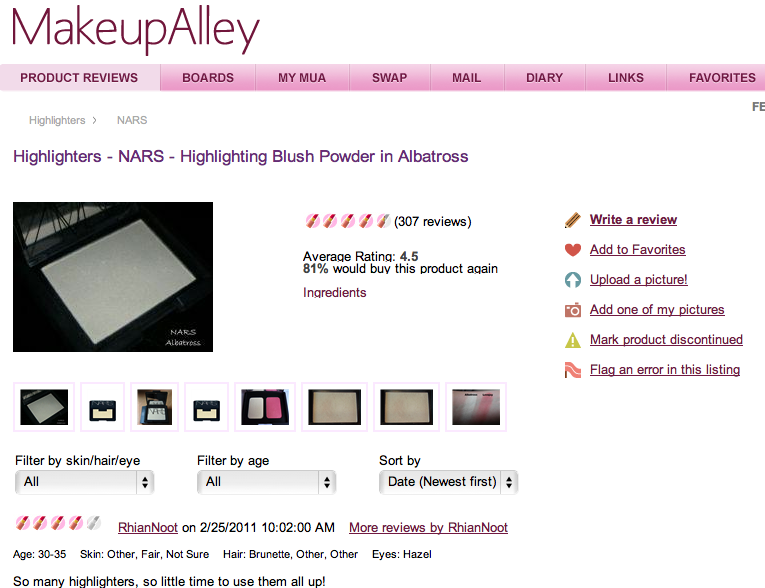
Sites such as makeup alley (shown below) rely on social proof to work. Users can read what their peers think of products, they can see the rating they gave it, what percentage of people would buy the product and importantly, they can see that the people are real.

Companies often use scarcity to act faster or pay more. Below is an example from a website that sells bedroom furniture. They use both limited time free delivery and a limited number of free drills to try to persuade the customer to purchase their products soon, otherwise they will miss out. People have a fear of loss so the thought of potentially losing something that is ‘free’ (another motivator) can be enough to get them to act.

We all look to experts for advice and recommendations. Even amongst our peers, we have experts who we turn to for advice. For example, if you need a new TV you might ask cousin John as he always knows a lot about entertainment systems. Or if your cat is ill, you might ask your friend Sarah for advice as she’s got 3 cats and is cat crazy! Each person is highly persuasive in their own way.

Persuasion is a fascinating subject area and i’ll be covering it in more depth in future posts, in particular how you can design to persuade.